Skip to product information

K&N's replacement air filters are designed to increase horsepower and acceleration while providing excellent filtration. We make over 1,200 different replacement air filters for the majority of vehicles on the road. These filters are washable and reusable and are custom designed to fit into your existing factory air box. Their drop-in design means adding performance is simple. With most vehicles you simply remove the disposable air filter and replace it with a K&N. See applicable instruction sheet for details. Our stock replacement air filters for street vehicles are covered by our famous K&N Million-Mile Limited Warranty and will be the last air filter your vehicle will ever need.
Installation Instructions
This Part Fits:


K&N Replacement Air Filter VW F/I Cars 75-92
SKU: KNN33-2001
$50.39 USD
Shipping calculated at checkout.
Installation Instructions
This Part Fits:
| Year | Make | Model | Submodel |
|---|---|---|---|
| 1980-1983 | Audi | 4000 | Base |
| 1982-1983 | Audi | 4000 | GT |
| 1982-1987 | Audi | 4000 | S |
| 1986-1987 | Audi | 4000 Quattro | CS |
| 1984-1985 | Audi | 4000 Quattro | S |
| 1979-1982 | Audi | 5000 | Base |
| 1979-1981 | Audi | 5000 | S |
| 1988-1992 | Audi | 80 | Base |
| 1988-1992 | Audi | 80 Quattro | Base |
| 1988-1991 | Audi | 90 | Base |
| 1990-1991 | Audi | 90 Quattro | 20v |
| 1988-1989 | Audi | 90 Quattro | Base |
| 1981-1985 | Audi | Coupe | Base |
| 1986-1987 | Audi | Coupe | GT |
| 1990-1991 | Audi | Coupe Quattro | 20v |
| 1990 | Dodge | Monaco | ES |
| 1990 | Dodge | Monaco | LE |
| 1988-1992 | Eagle | Premier | ES |
| 1990-1992 | Eagle | Premier | ES Limited |
| 1988-1992 | Eagle | Premier | LX |
| 1979-1983 | Fiat | 124 | Spider |
| 1982-1985 | Ford | Escort | Base |
| 1982-1985 | Ford | Escort | GL |
| 1982-1983 | Ford | Escort | GLX |
| 1982-1985 | Ford | Escort | GT |
| 1984-1985 | Ford | Escort | GT Turbo |
| 1982,1985 | Ford | Escort | L |
| 1983-1985 | Ford | Escort | LX |
| 1974-1975 | Opel | Manta | Base |
| 1975 | Opel | Manta | Luxus |
| 1975 | Opel | Manta | Rallye |
| 1974-1979 | Volkswagen | Beetle | Base |
| 1980-1981 | Volkswagen | Dasher | Base |
| 1985-1986,1988-1989 | Volkswagen | Golf | Base |
| 1987-1991 | Volkswagen | Golf | GL |
| 1987-1988 | Volkswagen | Golf | GT |
| 1985-1987 | Volkswagen | Golf | GTI |
| 1987-1989 | Volkswagen | Golf | GTI 16-Valve |
| 1990-1991 | Volkswagen | Golf | GTI 8-Valve |
| 1981-1989 | Volkswagen | Jetta | Base |
| 1988-1992 | Volkswagen | Jetta | Carat |
| 1984-1992 | Volkswagen | Jetta | GL |
| 1984-1987 | Volkswagen | Jetta | GLI |
| 1987-1989 | Volkswagen | Jetta | GLI 16-Valve |
| 1981 | Volkswagen | Jetta | Special Edition |
| 1987 | Volkswagen | Jetta | Wolfsburg Edition |
| 1972-1974 | Volkswagen | Karmann Ghia | Base |
| 1982-1983,1985-1987 | Volkswagen | Quantum | Base |
| 1982-1987 | Volkswagen | Quantum | GL |
| 1986-1987 | Volkswagen | Quantum | Syncro |
| 1984 | Volkswagen | Quantum | Wolfsburg Edition |
| 1975-1982 | Volkswagen | Rabbit | Base |
| 1975-1980 | Volkswagen | Rabbit | Custom |
| 1975-1980 | Volkswagen | Rabbit | Deluxe |
| 1983 | Volkswagen | Rabbit | GL |
| 1981-1984 | Volkswagen | Rabbit | L |
| 1981 | Volkswagen | Rabbit | L Custom |
| 1982 | Volkswagen | Rabbit | Limited Edition |
| 1981-1983 | Volkswagen | Rabbit | LS |
| 1981 | Volkswagen | Rabbit | Ls Deluxe |
| 1981-1982 | Volkswagen | Rabbit | S |
| 1983 | Volkswagen | Rabbit | Wolfsburg Edition |
| 1980-1983 | Volkswagen | Rabbit Pickup | Base |
| 1980-1983 | Volkswagen | Rabbit Pickup | LX |
| 1980-1983 | Volkswagen | Rabbit Pickup | Sport |
| 1975-1980 | Volkswagen | Scirocco | Base |
| 1980 | Volkswagen | Scirocco | S |
| 1971-1974 | Volkswagen | Transporter | 211 |
| 1971-1973 | Volkswagen | Transporter | 215 |
| 1971 | Volkswagen | Transporter | 261 |
| 1971 | Volkswagen | Transporter | 265 |
| 1969-1974 | Volkswagen | Transporter | Base |
| 1982-1983 | Volkswagen | Vanagon | Campmobile |
| 1982-1984 | Volkswagen | Vanagon | GL |
| 1982-1984 | Volkswagen | Vanagon | L |
| 1970-1974 | Volvo | 142 | Base |
| 1971-1972 | Volvo | 142 | E |
| 1974 | Volvo | 142 | GL |
| 1969-1974 | Volvo | 142 | S |
| 1970-1974 | Volvo | 144 | Base |
| 1974 | Volvo | 144 | GL |
| 1969-1974 | Volvo | 144 | S |
| 1970-1974 | Volvo | 145 | Base |
| 1969-1974 | Volvo | 145 | S |
| 1969-1972 | Volvo | 164 | Base |
| 1973 | Volvo | 164 | E |
| 1969-1973 | Volvo | 164 | S |
K&N Cold Air intake and Air Filters frequently asked questions
- ARE K&N® HIGH-FLOW AIR FILTERS™ BETTER THAN DISPOSABLE PAPER FILTERS?
Typical disposable paper air filters function on a size-dependent basis, in which dirt particles that are larger than the openings in the filter media are blocked, while particles that are smaller than the openings can pass through. Most disposable paper filters create more airflow restriction than K&N filters, as the openings in the filter media have to be tiny in order to filter efficiently, which can reduce airflow.
K&N® High-Flow Air Filters™ utilize depth loading, in which multiple layers of pleated cotton fibers provide particle retention on many levels. However, while most typical paper or foam filters would experience a large reduction in airflow when designed for a dramatic increase in efficiency, High-Flow Air Filters™ are specifically engineered to capture dirt while still allowing a high volume of airflow to pass through.
- WHY IS AIRFLOW CRITICAL TO ENGINE PERFORMANCE?
Under normal circumstances, an increase in airflow to the engine also increases the efficiency of the combustion process, which can result in an increase in horsepower. K&N® High-Flow Air Filters™ are designed to provide high airflow in order to help increase engine performance.
- WHAT’S THE DIFFERENCE BETWEEN K&N® FILTERS AND OTHER FILTERS THAT LOOK SIMILAR?
Both airflow and filtration efficiency are critical to engine performance. Some companies design filters that provide high airflow by greatly reducing filtration efficiency, which can risk engine damage. K&N® filters are designed to provide high airflow while also maintaining exceptional filtration. As the appearance of K&N filters has become popular, many companies have started offering products that mimic the appearance of K&N filters, but do not provide the same level of quality and protection.
- WHAT IS THE MICRON RATING AND EFFICIENCY OF A K&N® AIR FILTER?
Micron ratings are typically used only for liquid filters. K&N® tests filtration efficiency and capacity using the ISO 5011 laboratory test procedure, and most K&N® air filters test between 97%-99% efficiency. Many K&N air filters have published test data included in the “Available Information” section of the product details page.
- HOW EFFICIENT ARE K&N® FILTERS AT TRAPPING CONTAMINANTS?
Laboratory tests utilizing ISO 5011 test protocols demonstrate that most K&N® air filters achieve overall filtration efficiency in the range of 97% to 99%. (The ability of an air filter to protect an engine is generally measured in accordance with laboratory testing procedure ISO 5011.) K&N® air filter designs are subjected to ISO 5011 testing involving coarse and fine test dust, and the test results are measured by a specific air filtration efficiency number. K&N® filters are designed to provide exceptional airflow while simultaneously targeting an overall filtration efficiency that meets or exceeds OEM standards.
- DOES INCREASED AIRFLOW MEAN THAT MORE DIRT WILL GET THROUGH THE FILTER?
No. Most disposable filters are "barrier filters,” which act as a physical barrier to dust particles. Once a dust particle covers a pore in the media, air can no longer flow through that space. K&N® replacement air filters are designed to absorb dirt and dust particles instead of physically blocking them, allowing the pores in the material to continue flowing air.
- WHAT ARE THE FILTRATION REQUIREMENTS FOR MY VEHICLE?
Most vehicles do not have a published minimum filtration requirement, as filtration needs will vary greatly among vehicles based on usage and other factors. However, K&N® filters are engineered to meet or exceed OEM standards.
- HOW WILL A K&N® FILTER AFFECT MY VEHICLE’S FUEL ECONOMY?
K&N® does not make any claims or advertisements regarding fuel economy.
- WHAT INCREASE IN HORSEPOWER SHOULD I EXPECT FROM A K&N® REPLACEMENT FILTER?
K&N® does not complete vehicle performance tests (dynamometer tests) for every application for which a replacement air filter is offered. Airflow testing is performed on every air filter design in order to verify that the K&N filter provides high airflow. However, other components of the vehicle's air intake system (like the air filter housing or tubing) can create air restriction and limit horsepower. The design of these parts varies among different vehicles and manufacturers, so there is no way to accurately estimate a specific horsepower gain from replacing an air filter alone.
- SOME AIR FILTER COMPANIES ADVERTISE FILTRATION LEVELS IN THE 99TH PERCENTILE. SHOULDN’T I BUY THE FILTER WITH THE BEST FILTRATION?
Filter efficiency is only one element of filter performance. Capacity, restriction, and service life should also be taken into consideration when evaluating a filter. These other factors reflect the amount of dirt the filter can hold, how easily air can flow through the filter, and how long the filter can be used before servicing. A brick wall, for instance, would be likely to filter 100% of particulate matter—but would of course provide very limited airflow! K&N® filters are designed to strike a desirable balance between efficiency, capacity, durability, and airflow.
- ARE K&N® AIR FILTERS BETTER FOR THE ENVIRONMENT?
K&N® High-Flow Air Filters™ are designed to last for the life of your vehicle. If you assume an engine life of 175,000 miles—and replace your disposable air filter every 15,000 miles—only one K&N air filter will be used during the same period in which eleven disposable air filters are discarded.
- WHAT IS THE DIFFERENCE BETWEEN A DRYFLOW® AIR FILTER AND A HIGH-FLOW AIR FILTER™?
While the oiled K&N® High-Flow Air Filter™ continues to be the most popular filter type among K&N® filter products, K&N also offers non-oiled synthetic DRYFLOW® air filters. The DRYFLOW® filter media is composed of two-layered synthetic material, which—much like High-Flow Air Filter™ media—provides depth loading properties. DRYFLOW® filter media provides slightly less airflow than High-Flow Air Filter™ media, though it is still designed to strike a desirable balance between airflow and efficiency, provide a high level of contaminant capture, and outperform typical disposable paper air filters in airflow. Because they do not have to be re-oiled, servicing DRYFLOW® air filters is typically a quick and easy process.
- WILL USING A K&N® REPLACEMENT AIR FILTER VOID MY FACTORY WARRANTY
No. In the United States, in order for the manufacturer of a warranted product to void or deny warranty coverage of a repair due to the use of an aftermarket part, the manufacturer must provide proof that the aftermarket part is the cause of the necessary repair. These rights are protected under the Consumer Products Warranty Act of 1975 (also referred to as the Magnuson-Moss Warranty Act).
- IS A K&N® PERFORMANCE AIR INTAKE SYSTEM BETTER THAN A STOCK SYSTEM?
K&N® performance air intake systems are designed to create a less restrictive path for airflow to reach the engine by removing the stock intake tubing that can increase restriction, and also by utilizing high airflow filter media.
In a K&N cold air intake system, air first passes through a performance air filter—typically a High-Flow Air Filter™, and then passes through a specially designed tubing system that helps provide a smooth path for airflow.
- WHAT DOES A COLD AIR INTAKE DO FOR A CAR?
K&N® cold air intake systems allow for increased airflow to your engine, which results in an increase in horsepower and torque.
- WHAT INCREASE IN HORSEPOWER SHOULD I EXPECT FROM A K&N® AIR INTAKE SYSTEM?
K&N offers a guaranteed increase in horsepower and torque for all K&N intake systems. Dynamometer tests indicating estimated horsepower and torque increases compared to the OEM intake system will appear on the "Product Details" page for each performance intake system. Results will vary.
K&N® provides estimated SAE corrected horsepower gains that are based on actual dynamometer testing for a specific or similar vehicle. The actual horsepower increase a consumer will receive will vary depending on such things as vehicle condition, fuel, weather, and other circumstances. It would be impractical to test every possible vehicle configuration or year in which a particular engine may be used; therefore, many of our estimates are based upon similar engine/vehicle/year dynamometer testing that we believe to be representational for the vehicle listed.
- WILL USING A K&N® REPLACEMENT AIR INTAKE SYSTEM VOID MY FACTORY WARRANTY?
No. In the United States, in order for the manufacturer of a warranted product to void or deny warranty coverage of a repair due to the use of an aftermarket part, the manufacturer must provide proof that the aftermarket part is the cause of the necessary repair. These rights are protected under the Consumer Products Warranty Act of 1975 (also referred to as the Magnuson-Moss Warranty Act).
Things that could pair well together with what you are looking at...
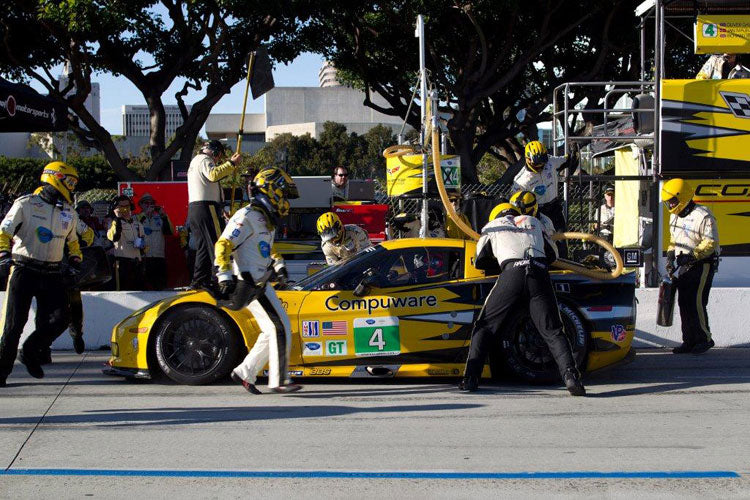
Your pit crew for parts
Real people making moves on your behalf to get you your parts the fastest way possible...

OUr client's love us
All of our reviews are verified by Judge.me via Post Order Satisfaction Follow-Ups...

Multiple Payment options
Visa/MC/AMEX/DISC - PayPay - Amazon, Apple & ShopPay as well as Financing from Affirm & ShopPay